Since President Donald Trump assumed his position in the White House, he has signed several controversial memos and orders. One of these is overturning the decision of the previous administration regarding the Dakota Access Pipeline.
The Dakota Access Pipeline is 1,200 miles long that will be used to transport about 470,000 barrels of crude oil per day through four states – from the Bakken oil fields in the North Dakota through South Dakota and Iowa up to a terminal in Illinois. The Energy Transfer Partners, the company responsible for this project, has claimed that the pipeline will provide more cost-effective and more efficient means of transportation of crude oil than using shipping process using barrels by train. In addition, it will help increase profit margins for oil companies while crude oil prices are low.
This seems to be an ideal project but what makes it controversial is the pipeline’s route. One Missouri River that crosses just north of the Standing Rock Sioux Reservation is included. Thus, the Standing Rock Sioux Tribe, environmentalists, and other supporters are protesting regarding this issue. The main arguments regarding the project are:
Contamination of drinking water of the nearby communities
Damages to sacred burial sites
The tribe states that the land was taken by the government from them illegally in an 1868 treaty
Native Americans also accuse the government that they weren’t consulted about this project
The pipeline will perpetuate fossil fuel production.
The U.S. Army Corps of Engineers denied the permit to build this project last year. However, the secretary of the Army interfered with the decision and granted the permit to complete the final part of the pipeline. In October 2016, the Energy Transfer Partners started the construction of the pipeline despite the request of three federal agencies that voluntarily halt activities near the Lake Oahe river crossing.
When Trump became the president, he signed a presidential memo regarding the use of American steel in any and all future pipeline projects. Furthermore, he backed up this project saying that it will ‘serve the national interest’ and ordered an ‘expedited’ review. He also ordered the withdrawal of the December memo from the army that effectively paused the project.
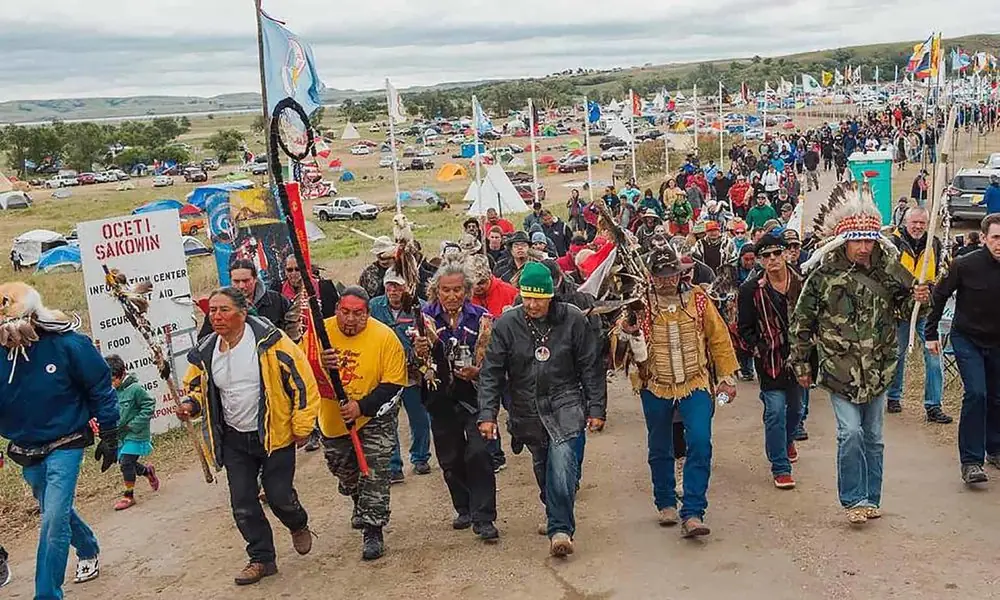
This became a more controversial issue that hundreds of people protested. It even gathered more than 200 Native American tribes, which is the largest coming together of indigenous people in the U.S. for decades. During the peak of this issue, there are an estimated 10,000 people who joined the demonstrations and went to the campsites in the region.
Some of the supporters are:
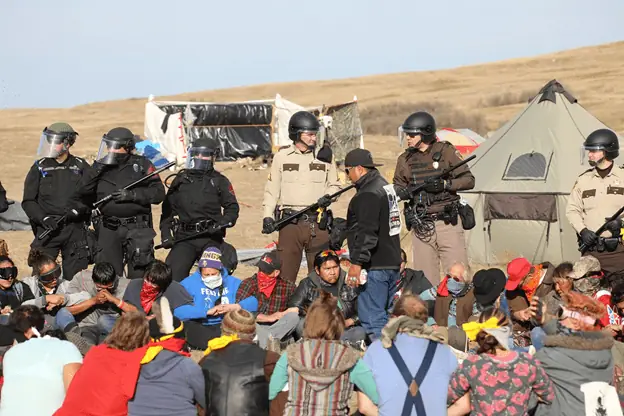
Hundreds of S. military veterans
Robert Kennedy, Jr. – environmental activist and nephew of the former president John F. Kennedy
Bernie Sanders – Democratic presidential primary contender
Jill Stein – Green Party presidential candidate
Several actors like Shailene Woodley and Mark Ruffalo
With the help of U.S. veterans, they are hoping that it will be harder for the police to remove the protesters in the area. Elizabeth William, an air force veteran, said “We are prepared to put our bodies between Native elders and a privatized military force. We’ve stood in the face of fire before. We feel a responsibility to use the skills we have.” The Veterans Stand, a military veteran organization, raised more than $200,000 as a campaign against the Dakota Access Pipeline. The money will be used to send supplies to the reservation in order to help the protesters and those who will be affected by the construction.
Some of the protests were not peaceful. There has been violence and several accusations on both sides. Protesters were accused of starting fires and harming the police force by throwing petrol bombs. Some of them are arrested for criminal trespass, riots, and other felonies.
On the other hand, police have been accused of using excessive force against the protesters. They douse the crowds with pepper spray, freezing water, firing sound cannons, beanbag rounds, and rubber bullets. There are even temporary cages made of chain-link where some of the protesters were held. These allegations led the United Nations to speak out about the issue.